
Save Your World
You can’t help everyone—but you can help someone

My brother shared a quote with me that he heard from a friend.
“Are you trying to save the whole world? Or are you trying to save your world?”
We live in the most globally connected time in history. Yet we’ve never felt so locally helpless when it comes to actually helping people.
We are consumed with so much global news, mostly negative, that we’ve begun to experience compassion fatigue at a wide scale.
Compassion fatigue is a term coined by Dr. Charles R. Figley, a psychologist and trauma researcher, back in the 1990s.
However, when Dr. Figley coined this phrase, it was derived from his research on occupations such as therapists, counselors, first responders and even caregivers. Occupations that had a front-row seat to life’s most difficult and traumatic realities.
Now, compassion fatigue has shifted from being solely occupational… to cultural.
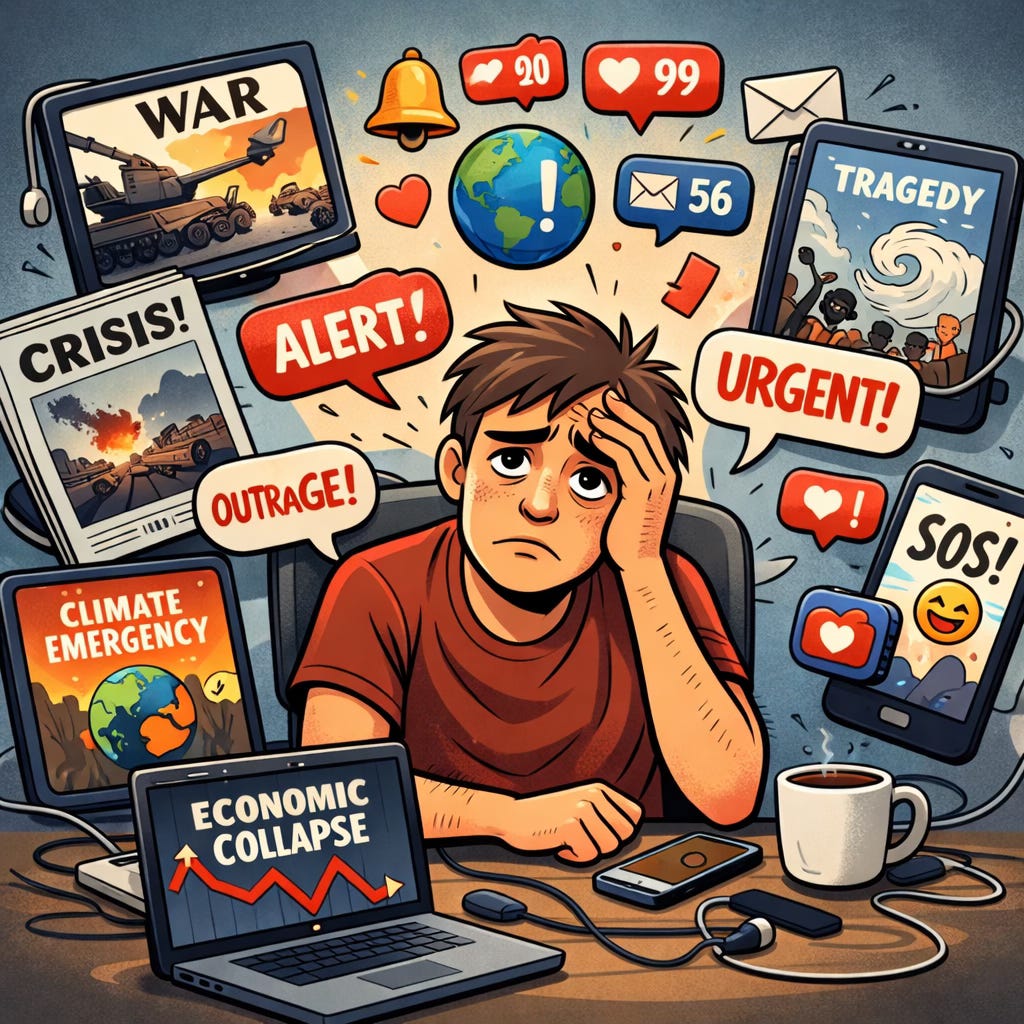
We all have access and visibility to tragedy and trauma at our fingertips. We see war zones, assassinations, and natural disasters… all while on our lunch break. We absorb all of that and then we go right back to serving tables, leading meetings or carpooling kids to the next practice.
Not to mention we are constantly being told what to care about or what opinion we need to hold as gospel about the next urgent news cycle.
So what is the big deal?
Our awareness has gone global, yet our capacity hasn’t changed. We are still just one human being living in one place at a time.
So what does compassion fatigue lead to if it just goes on and on?
Emotional numbness
Constant overwhelm
Mental or emotional exhaustion
Detachment or isolation
Sound familiar?
Whether you’ve thought long about it or not… it’s likely you have experienced this.
And if you don’t recognize it in your own experience, you’ve certainly experienced it out in the wild.
Uninspired staff meetings, human-less retail interactions and neighborhoods filled with strangers. Not because there wasn’t anyone physically present… everyone is just compassion fatigued.
The beauty is that the antidote is painfully simple, but not always easy. Like many things in life, it’s simple, but comes with a choice.
We must shrink our global intake, not our heart for people.
Now to make one thing wildly clear: some people are called to global missions and outreach. There are many incredible organizations led by people who charge into the world and do beautiful and important work. It’s just not the majority of people.
Most people’s greatest “mission field” is right in front of them everyday.
When we choose to look at the world in front of us instead of through a screen, what once felt hopeless and overwhelming, now feels just within our reach.
No matter where you live or what you do for work, you can help someone. And that person is likely standing right in front of you, or maybe even lives across the street.
To say it plainly, the antidote for compassion fatigue is: see a need, meet a need.
You can serve at your church
You can make food for a neighbor in need
You can open your home to friends going through a tough season
You can be kind to the person serving you or the person you are serving
By moving your focus from global to local… you suddenly regain your God given agency to make real change and have real influence.
Andy Stanley says it another way.
"Do for one what you wish you could do for everyone”
So perhaps you can’t save the entire world.
But perhaps you can take one step toward saving your own.
The Human Reset
One question:
Where has my awareness grown bigger than my willingness to act?
One action:
Choose one small, tangible way to serve someone this week—no announcement, no credit, no applause.
One quote:
“Do for one what you wish you could do for everyone.”
— Andy Stanley
Shrinking your global intake but not your heart might be the most important reframe of our generation. We've been conditioned to think that caring more means consuming more, but all it's actually done is paralyze us. The most impactful thing most of us will ever do happens within arm's reach. Great post!
I completely agree! And even having lived in the mission field for a big part of my life, it is the same there. We come with the mindset of changing the world, when really we just interact with the people right in front of us - our neighbors, our community, etc. Great article.